
Obesity is one of the most significant health problems of the modern world.
According to the World Health Organization (WHO), obesity is today considered a disease, not an aesthetic issue.
It is associated with numerous complications, such as type 2 diabetes, hypertension, cardiovascular diseases and sleep apnoea.
When conservative treatment (diet, medication, etc.) fails, bariatric procedures offer effective solutions for substantial weight loss and improvement in health.
When should patients with obesity undergo surgery?
Surgery is indicated when BMI (Body Mass Index), expressed in kg/m², is:
- Greater than 34 kg/m², accompanied by comorbidities such as type 2 diabetes, hypertension, cardiovascular diseases or sleep apnoea.
- Greater than 40 kg/m² (an absolute indication for surgery). In this case, obesity is classified as morbid obesity, as the patient will soon develop complications due to obesity.
- Greater than 28 kg/m², with the presence of type 2 diabetes (metabolic surgery).
ONLY then is there an indication for patients to undergo surgery.
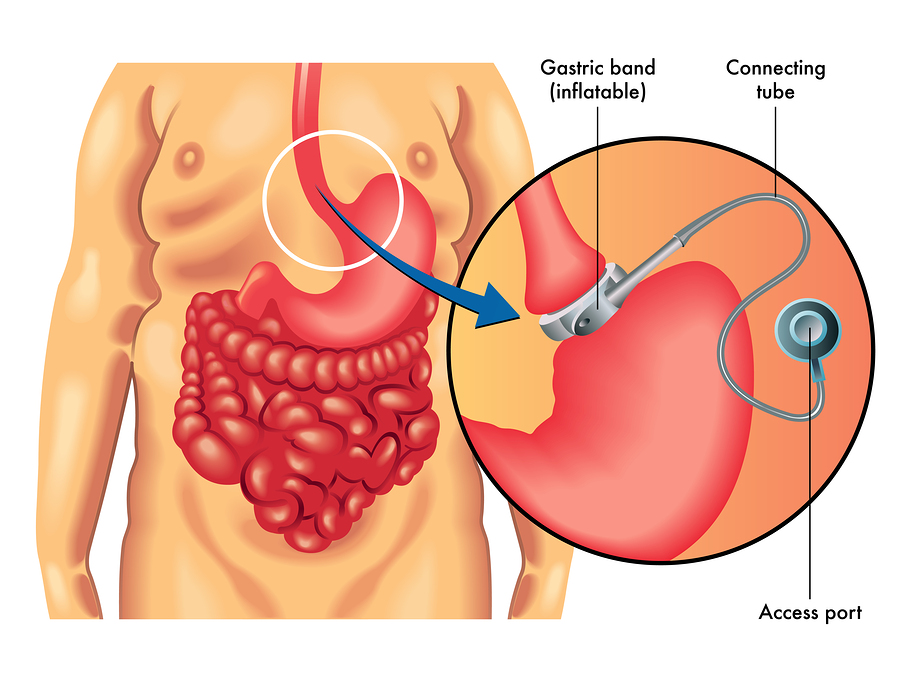
Laparoscopic placement of a gastric band for obesity is a surgical procedure that flourished during the 2000s.
It is considered a relatively simple bariatric operation.
This procedure has good outcomes in weight loss, provided that appropriate patient selection is made—specifically, patients who can tolerate the band.
It is also the procedure of choice for obese patients with severe respiratory or cardiac problems.
The gastric band (essentially a fibrous, volume-adjustable ring) functions as a constrictor of the upper stomach.
As a result, patients cannot tolerate large quantities of food.
Weight loss results from reduced food intake.
If the patient persists in eating more than tolerated—despite feeling unable to ingest more food—food-related vomiting occurs.
Many such procedures have been performed for obesity; HOWEVER, many patients later requested removal of the gastric band.
The most serious complications of laparoscopic gastric band placement include:
• Erosion of the upper stomach caused by the band (an emergency requiring laparoscopic removal and repair of gastric perforation).
• Pseudo-obstruction of the oesophagus, caused by the narrowing induced by the band, which must then be removed.
Today, worldwide, only very few gastric band procedures are performed for the treatment of obesity.