
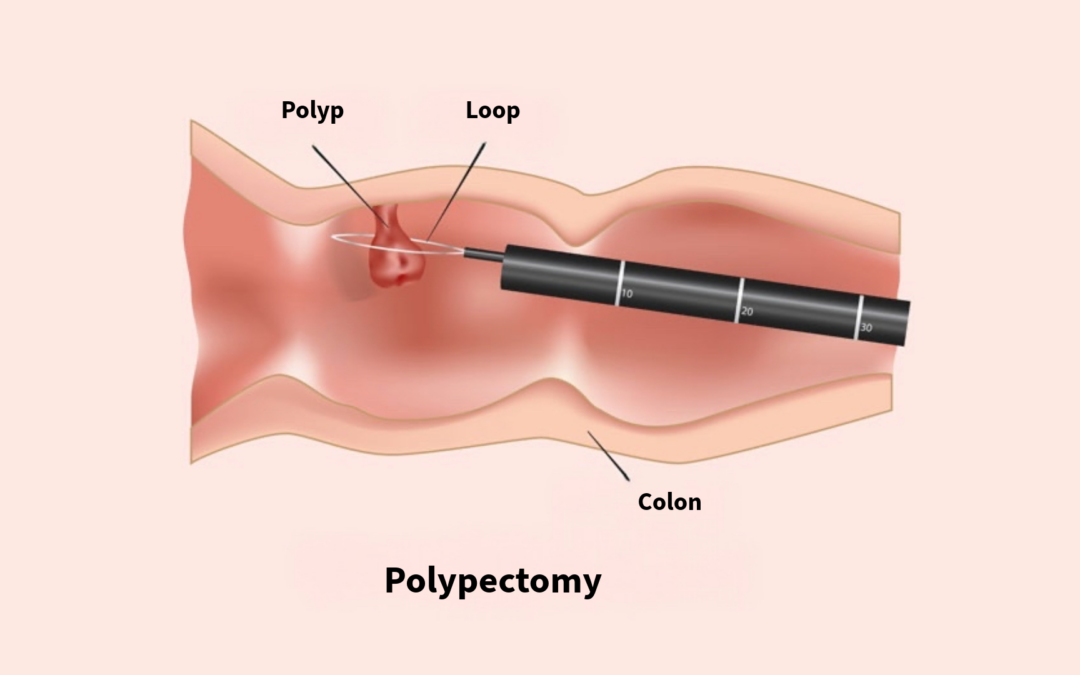
Laparoscopic Excision of Rectal Polyps
Rectal polyps are small accumulations of cells that protrude into the lumen of the bowel.
They do not develop from one day to the next and must be diagnosed by colonoscopy and removed in order to prevent malignant transformation.
In most cases, polyps are removed endoscopically by an experienced and appropriately trained gastroenterologist.
However, certain rectal polyps—due to their extent or size—require surgical excision.
TAMIS Technique
In such cases, laparoscopic excision of rectal polyps using the TAMIS (Transanal Minimally Invasive Surgery) method is indicated.
A preoperative MRI of the rectum is essential to assess the depth of invasion according to the TNM classification and to determine whether this technique is appropriate for polyp excision.
The procedure is best performed under general anaesthesia. Using specialised instruments, the polyp is excised full-thickness, and the rectal wall is subsequently sutured.
The specimen is sent for histopathological examination to determine whether excision is sufficient or whether further surgery—such as colectomy or possible colostomy—is required.
This technique offers the advantage of avoiding a major operation and the potential need for colostomy from the outset.
Elderly patients or those with contraindications to major surgery are also suitable candidates for laparoscopic rectal polyp excision using the TAMIS method.