
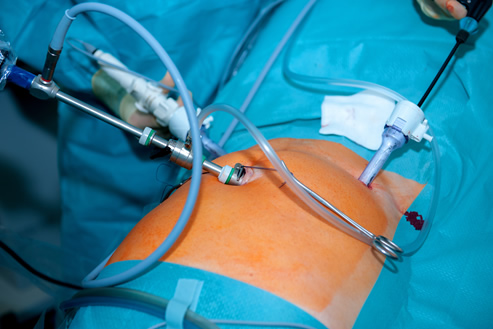
Laparoscopic Colectomy
Laparoscopic colectomy is a major, and often necessary, surgical procedure involving the removal of a segment or the entirety of the large intestine (colon).
Although the prospect of such an operation may raise questions and concerns, it has proved life-saving for thousands of patients with benign or malignant colorectal conditions.
With advances in medical technology and surgical technique, colectomy today is safer, more effective, and associated with reduced postoperative burden.
Indications for Colectomy
The decision to proceed with colectomy is not taken lightly. It is based on clear clinical and imaging findings and constitutes a therapeutic intervention in conditions such as:
- Colorectal cancer: The most common indication. Surgical excision of the tumour is the first and most crucial step in disease management.
- Diverticulitis: Especially when recurrent, or when complicated by abscess formation or perforation.
- Inflammatory bowel disease: In severe forms of ulcerative colitis or Crohn’s disease, colectomy may relieve chronic symptoms and frequent exacerbations.
- Polyposis syndromes: Such as familial adenomatous polyposis (FAP), where colectomy is recommended prophylactically to prevent cancer.
- Acute bowel obstruction or perforation: Situations requiring immediate surgical intervention.
Types of Laparoscopic Colectomy
Colectomy is not a single standardised operation; it is tailored to the diseased segment and the treatment plan:
- Laparoscopic Right Colectomy: Removal of the caecum and ascending colon, usually for right-sided cancers or lesions.
- Laparoscopic Left Colectomy: Targeting the descending colon, indicated for left-sided pathology.
- Laparoscopic Transverse Colectomy: Resection of the transverse colon; less common but necessary for specific localised disease.
- Laparoscopic Sigmoidectomy: Frequently performed for chronic diverticulitis or localised sigmoid tumours.
- Laparoscopic Total Colectomy: For severe inflammatory disease or extensive cancer; removal of the entire colon, with or without the rectum.
- TaTME: In rectal malignancy (up to stage T3), laparoscopic sigmoidectomy is combined with transanal tumour excision. This avoids an abdominoperineal resection, preserves the sphincters, and allows normal bowel function.
Preoperative Preparation
Effective preoperative preparation is essential for the safety and success of surgery:
- Colonoscopy is performed not only for diagnosis but also to map the lesion.
- Imaging studies, such as CT or MRI, assess intra-abdominal spread or complications.
- Routine haematological and cardiological investigations ensure fitness for anaesthesia.
- Specific bowel preparation, including dietary modification and laxatives, helps reduce postoperative complications.
Surgical Procedure
The procedure is performed using laparoscopic technique, which is increasingly preferred due to its advantages: smaller incisions, reduced pain, and faster recovery.
During colectomy, the diseased bowel segment is removed and, where feasible, an anastomosis is created to restore intestinal continuity.
In more complex or emergency situations, creation of a stoma (colostomy or ileostomy) may be required and may be temporary or permanent depending on the case.
Postoperative Recovery
Recovery varies among patients, but typically includes:
- Hospital stay of 3 to 5 days, depending on clinical progress — a recognised advantage of laparoscopic surgery.
- Gradual reintroduction of diet, beginning with liquids and progressing to light solids.
- Early mobilisation, often on the day of surgery, to prevent complications such as venous thrombosis or pneumonia.
- Stoma-care education where applicable.
- Close postoperative monitoring for signs of infection, electrolyte disturbances, or anastomotic complications.
Laparoscopic colectomy is a demanding but highly effective procedure for patients with significant colorectal disease.
With modern techniques, dedicated surgical training, specialised postoperative care, and active patient participation, outcomes are consistently encouraging.