
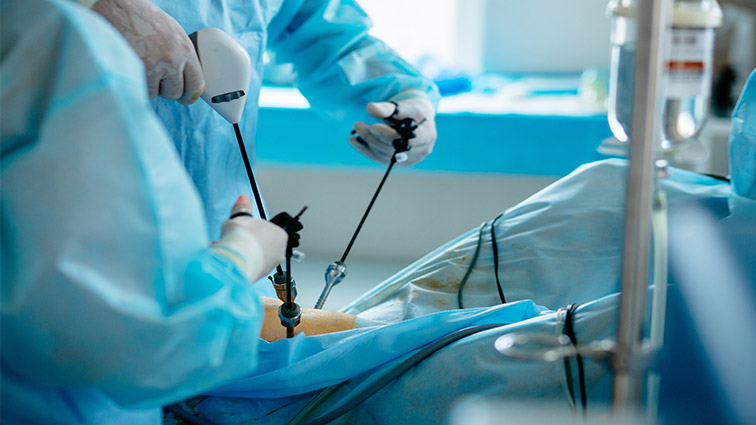
Laparoscopic Inguinal Hernia Repair Using the TEP Technique
There are various types of hernias of the abdominal wall. The most common is the inguinal hernia (more frequent in men).
An inguinal hernia is the appearance of a swelling (painful or painless) in the inguinal regions (right or left).
Under normal conditions, small anatomical gaps exist; when these widen, an intra-abdominal organ (most commonly bowel or omentum) may protrude, causing symptoms.
Symptoms of an inguinal hernia:
• Swelling in the area (small or large), varying with increases in intra-abdominal pressure.
• Pain that worsens (as the day progresses, with physical activity, persistent coughing, or difficulty in urination).
When the pain does not subside, urgent surgical assessment by a specialist surgeon is required, with a possibility of emergency operation to prevent progression even to peritonitis. This condition is known as incarcerated inguinal hernia.
EVERY patient diagnosed with an inguinal hernia must undergo surgery—electively, or urgently if incarceration is diagnosed.
The TEP laparoscopic inguinal hernia repair is performed under general anesthesia.
Through three small incisions in the anterior abdominal wall, the preperitoneal space is accessed (without entering the peritoneal cavity). Adequate working space is created, with or without the use of a special laparoscopic tool. The hernia sac is identified, reduced, and a sufficiently large mesh is placed to cover the areas where hernias arise (direct, indirect, and femoral). The mesh is secured with a fixation device, biological glue, or left unsecured.
The mesh is completely inert to the body, ensuring that no mesh-related complications occur.
Advantages of this technique:
• Minimal or absent postoperative pain
• Rapid mobilization
• Early resumption of daily activities
• Avoidance of adhesions
SPECIALIZED surgical training is REQUIRED, as well as the use of specific laparoscopic instruments, because the working space is very limited. The hernia must also be reducible.
Laparoscopic Inguinal Hernia Repair Using the TAPP Technique
There are various types of hernias of the abdominal wall. The most common is the inguinal hernia (more frequent in men).
An inguinal hernia is the appearance of swelling (painful or painless) in the inguinal regions (right or left). Normally, small anatomical openings exist; when these widen, an intra-abdominal organ (usually bowel or omentum) may protrude, producing symptoms.
Symptoms of an inguinal hernia:
• Swelling in the area (small or large), varying with increases in intra-abdominal pressure.
• Pain that worsens (as the day progresses, with athletic activities, persistent coughing, or difficulty in urination).
When pain does not subside, urgent surgical evaluation by a specialist surgeon is required, with possible emergency intervention to prevent progression even to peritonitis. This is known as incarcerated inguinal hernia.
EVERY patient diagnosed with an inguinal hernia must undergo surgery—electively or urgently in cases of incarceration.
The TAPP laparoscopic inguinal hernia repair is performed under general anesthesia.
Through three small incisions in the anterior abdominal wall, access is gained to the peritoneal cavity. A full diagnostic laparoscopy is performed, and adequate working space is created by mobilizing the peritoneum. The hernia sac is identified, reduced, and a sufficiently large mesh is placed to cover all potential hernia sites (direct, indirect, and femoral). The mesh is secured with a fixation device, biological glue, or left unsecured.
The mesh is entirely inert to the body, preventing mesh-related complications.
Advantages of this technique:
• Minimal or absent postoperative pain
• Rapid mobilization
• Early return to daily activities
• Possible occurrence of adhesions
When incarceration or difficult reduction of an inguinal hernia is present, this is the technique of choice.
SPECIALIZED surgical training is REQUIRED, and standard laparoscopic instruments are used, as the working space is larger.