
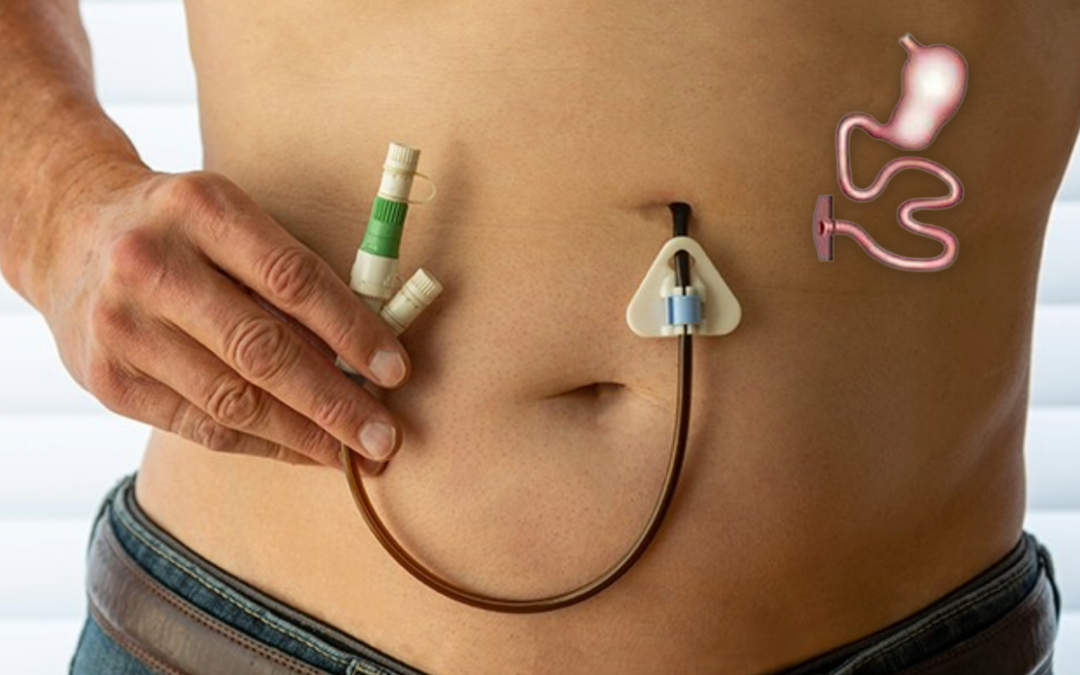
The most common jejunostomies are those performed to support nutrition (feeding jejunostomies).
A segment of the jejunum is brought out to the skin as a stoma, or a specialised feeding tube is inserted into the jejunum and exits through the abdominal wall.
This allows the administration of specialised nutritional formulas to assist the patient’s recovery.
Jejunostomy may be performed either electively or as an emergency procedure.
Common Indications for Jejunostomy
• Following major operations where nutritional support is required (oesophageal, pancreatic, or gastric surgery)
• In severely malnourished patients in whom endoscopic jejunostomy cannot be achieved
• Inability to swallow due to neurological conditions, cerebrovascular accidents, etc.
In planned operations, jejunostomy may be performed as part of the surgical procedure during major abdominal surgeries.
Types of Jejunostomy
Jejunostomies may be permanent or temporary:
• Permanent jejunostomies, which remain lifelong, are performed following the treating physician’s decision.
• Temporary jejunostomies, which remain in place for a limited therapeutic period, are created according to the surgeon’s clinical judgement.
Closure / Reversal of Jejunostomy
Closure (or reversal) of a jejunostomy is performed either through an open operation or laparoscopically, the latter being associated with reduced patient morbidity.