
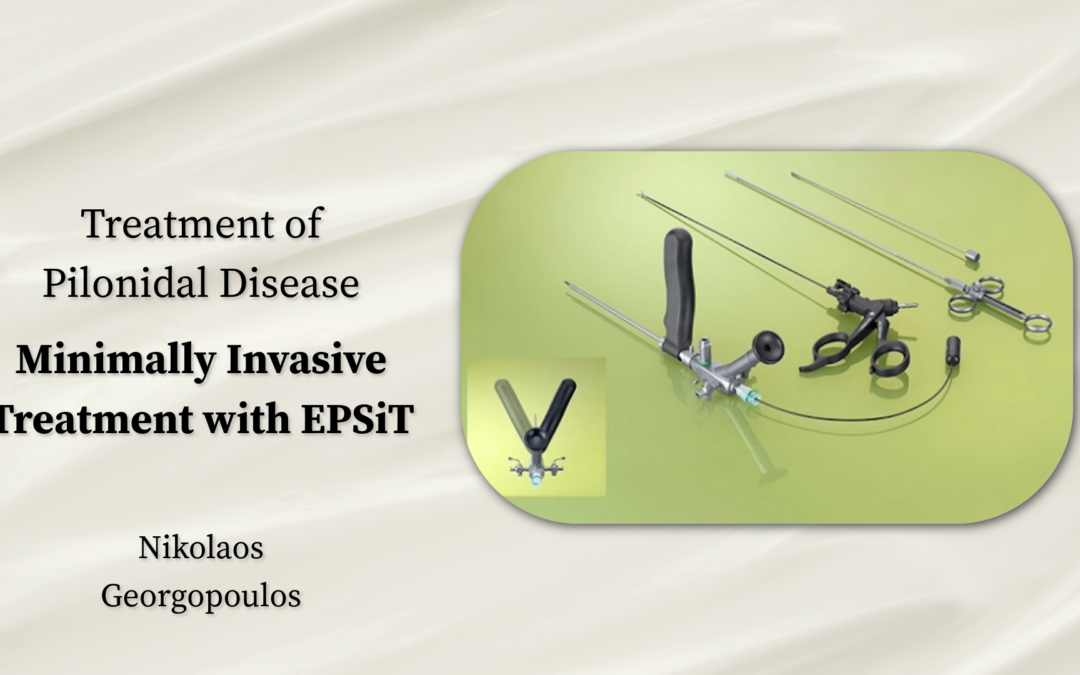
Endoscopic Treatment of Pilonidal Disease – Modern, Minimally Invasive Treatment with EPSiT
Surgical treatment is recommended for symptomatic pilonidal disease to address the underlying sinus tracts and reduce the risk of persistent infection or recurrence.
EPSiT (Endoscopic Pilonidal Sinus Treatment) is a minimally invasive surgical technique performed using a dedicated endoscope that allows direct visualization of the sinus cavity and its tracts.
Through a tiny opening, usually just 2–3 mm, the surgeon explores and cleans the cavity, removes embedded hair and inflammatory debris, and treats the sinus lining under direct endoscopic vision.
The procedure is performed under general or, in selected cases, regional anesthesia.
Unlike conventional excisional surgery, it does not require a large open wound or sutures. The small access opening is left to heal naturally.
Advantages and Postoperative Care
The EPSiT technique offers several potential benefits:
● Minimal surgical trauma and a very small skin opening.
● No large open wound or need for wound closure with sutures.
● Less postoperative discomfort and easier daily activities.
● A potentially faster recovery compared with conventional excisional techniques.
After surgery, careful hygiene of the area is essential.
Gentle cleansing, including irrigation with small amounts of saline when recommended, is usually required for approximately 15–20 days, according to the surgeon’s instructions.
EPSiT offers a minimally invasive option for appropriately selected patients, with the aim of treating pilonidal disease while minimizing tissue damage and facilitating recovery. The suitability of the technique depends on the extent and complexity of the sinus, and recurrence remains possible.