
Haemorrhoidectomy using the HAL-RAR Method
Haemorrhoids are a very common benign condition of the anorectal region.
Symptoms:
• Pruritus
• Discharge from the anal canal, or—most commonly—the presence of blood on toilet paper after defaecation (and occasionally active bleeding during defaecation)
• Small swellings/nodules at the anal verge or painful perianal lumps
Constipation frequently precedes the onset of symptoms.
The diagnosis is established through a simple digital rectal examination.
HOWEVER, other anorectal pathologies must be excluded by endoscopic evaluation of the large bowel – colonoscopy is mandatory.
Patients diagnosed with haemorrhoids should:
Initially attempt conservative management (adequate diet, avoidance of constipation with regulated bowel habits) to reduce symptomatic haemorrhoidal disease.
If conservative measures fail, surgical treatment becomes necessary.
This prevents progression of haemorrhoidal enlargement, the development of fissures or fistulae, and—very importantly—the onset of anaemia due to chronic blood loss.
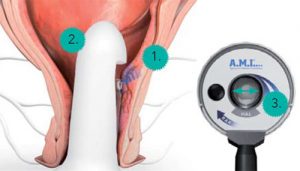
A newer surgical option is haemorrhoidectomy using the HAL-RAR method.
During this procedure, the arterial branches supplying the haemorrhoidal cushions (one to three, and occasionally secondary cushions) are ligated using Doppler ultrasound guidance and placement of sutures for arterial occlusion.
The operation is performed under regional anaesthesia (spinal or epidural) or general anaesthesia.
Postoperatively, mild pain may occur and is managed with simple analgesics.
For a period of 15–20 days, meticulous hygiene of the area is required, including sitz baths.