
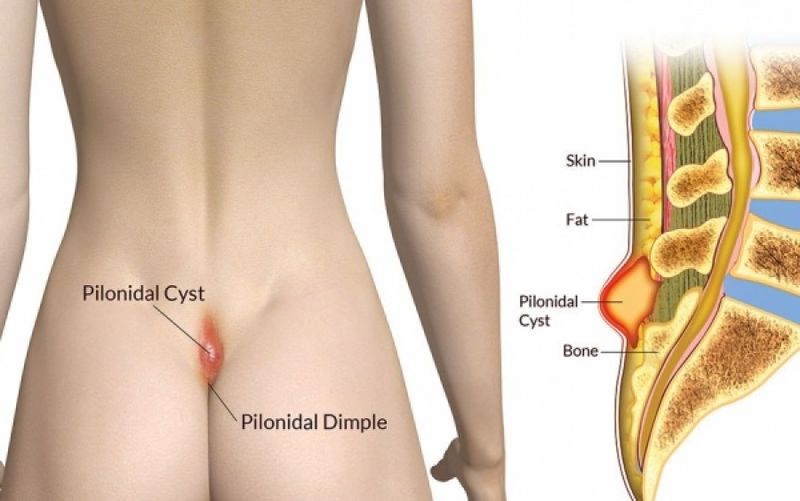
Pilonidal Cyst (or Pilonidal Sinus) – Open Method
A pilonidal cyst is a common benign condition located superior and posterior to the anal region.
Symptoms
- Pruritus
- Discharge
- Pain associated with redness and local swelling
It may occur at any age but is more frequently seen in younger individuals.
Contributing factors include dense hair growth, prolonged sitting, and inadequate local hygiene.
The diagnosis is made through a simple clinical examination by a surgeon.
Patients diagnosed with a pilonidal cyst must undergo surgical treatment; no effective alternative therapy exists.
Timely intervention prevents worsening of symptoms and the formation of sinus tracts, which can significantly burden the patient.
The most traditional surgical technique is the open excision of the pilonidal cyst.
The procedure involves removal of the cyst together with surrounding fibro-fatty tissue and any existing sinus tracts.
Surgery is performed under regional anaesthesia (local or epidural).
Following excision, it is preferable to leave the wound open, without suturing, allowing it to heal by secondary intention.
This approach reduces the risk of recurrence, which is otherwise common.
Postoperative pain is usually mild and managed with simple analgesics.
For approximately 15–20 days, meticulous local hygiene with sitz baths is required.