
Laparoscopic – Robotic Surgery
Robotic Surgical Management of Hernias: A New Era in Surgical Precision
What a hernia is and why it requires treatment
A hernia is one of the most common reasons for surgical intervention in daily clinical practice.
It refers to the protrusion of an intra-abdominal organ or tissue through a weakened point of the abdominal wall.
While in some cases it may be asymptomatic, the majority of hernias cause discomfort or pain and carry a risk of complications such as incarceration or obstruction, making treatment essential.
Surgical repair is the only definitive treatment for a hernia.
Today, robotic surgery introduces new standards, enabling high-precision repairs, minimizing postoperative pain, and significantly reducing recurrence rates.
Types of hernias and their characteristics
Inguinal hernias
The most common type, occurring in the groin region and more frequently in men.
It presents as a protrusion or swelling that worsens with physical activity or coughing.
Robotic repair allows highly accurate mesh placement, even in bilateral or recurrent cases.
Femoral hernias
These occur in the femoral–inguinal region and are more common in women, particularly after pregnancy.
Due to their anatomical location, they have a higher likelihood of becoming incarcerated.
The robotic approach offers excellent visualization and precise handling, minimizing the risk of vascular injury.
Umbilical hernias
These present at the navel and are common in women after pregnancy, in patients with obesity, or in individuals who strain the abdominal area.
Repair typically involves a combination of suturing and intraperitoneal mesh placement.
The robotic technique ensures stable and precise mesh positioning with minimal tissue trauma.
Incisional hernias
These are particularly demanding, as they occur at the site of previous surgical incisions.
The operative field is often altered by adhesions, and repair requires experience.
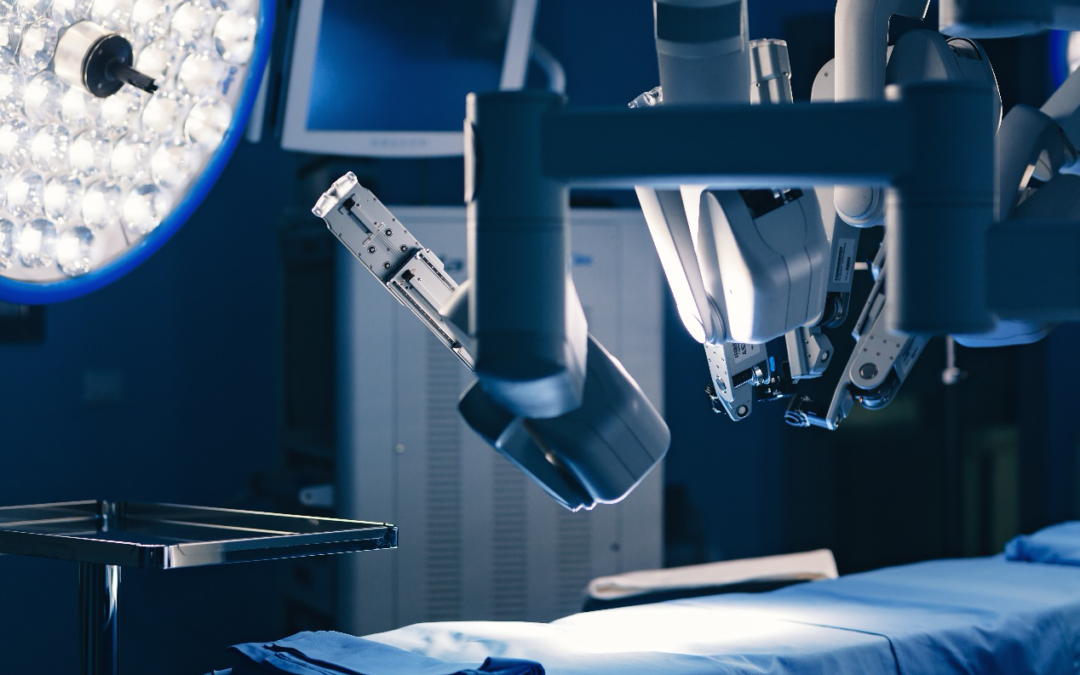
The Da Vinci robotic system allows exceptional access, meticulous dissection of the area, and proper mesh placement on a “tensioned” abdominal wall.
Advantages of robotic surgery using the Da Vinci system
Robotic surgery represents the most advanced form of minimally invasive hernia repair.
The surgeon controls the robotic arms from a dedicated console, benefiting from:
• Three-dimensional, magnified visualization of the operative field
• Absolute instrument stability
• Exceptional precision even in confined anatomical spaces
• Minimal trauma to surrounding tissues
Compared with open or laparoscopic techniques, the robotic approach offers:
• Reduced postoperative pain
• Less blood loss
• Faster mobilization
• Quicker return to daily activities
• Lower recurrence rates when combined with proper technique and materials
It is ideally suited for complex or recurrent hernias, for patients with obesity, or when multiple areas require repair.
Recovery and postoperative instructions
Recovery after robotic hernia repair is typically rapid and minimally painful.
Most patients are discharged from the hospital on the same or the following day.
General guidelines include:
• Avoiding heavy lifting for 4–6 weeks
• Gradual return to physical activity (walking from the first day)
• Maintaining good hygiene of the incision areas
• Follow-up examinations with the surgeon as instructed
• Use of an abdominal binder if recommended
Adherence to the postoperative instructions is important to prevent recurrence and ensure proper healing.
Robotic surgery has introduced new standards in hernia repair, enabling procedures with minimal trauma, high precision, and quick recovery.
From simple inguinal hernias to complex incisional defects, the Da Vinci system provides safe and effective repair, even in patients with challenging anatomy.
The selection of the appropriate repair method is individualized, based on the type of hernia, the patient’s medical history, and clinical needs.
Collaboration with a surgeon specialized in robotic techniques is the first step toward achieving a safe and definitive outcome.