
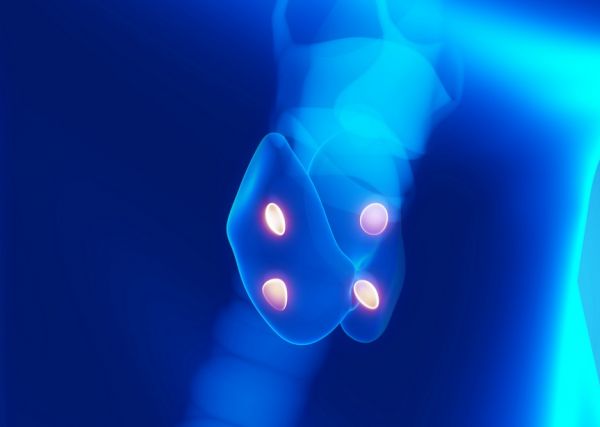
The parathyroid glands are small but vital structures located near the thyroid gland and are responsible for regulating blood calcium levels.
When dysfunction occurs—such as hyperparathyroidism—surgical removal of one or more glands may be required, a procedure known as parathyroidectomy.
This is a safe and effective operation that restores normal calcium levels in the body and significantly improves the patient’s quality of life.
What Is Parathyroidectomy?
Parathyroidectomy is the surgical procedure aimed at removing one or more parathyroid glands when they exhibit pathological overactivity.
The parathyroid glands regulate blood calcium through the secretion of parathyroid hormone (PTH).
When one or more glands become overactive, they produce excessive PTH, resulting in elevated blood calcium levels (hypercalcaemia), a condition that may cause problems affecting the bones, kidneys, heart and nervous system.
Diseases of the Parathyroid Glands
The main conditions that may lead to the need for parathyroidectomy include:
• Primary hyperparathyroidism: Most commonly due to an adenoma (benign tumour) of a single parathyroid gland causing uncontrolled PTH secretion.
• Secondary hyperparathyroidism: Typically associated with chronic renal failure, where parathyroid glands increase PTH production in response to persistently low calcium levels.
• Tertiary hyperparathyroidism: Occurs when the glands continue to overproduce PTH even after the correction of the underlying cause.
• Parathyroid carcinoma: A rare but serious condition requiring complete removal of the pathological gland(s).
The Procedure
The operation is performed under general anaesthesia and lasts 1 to 2 hours.
Prior to surgery, the patient undergoes several diagnostic assessments to identify the pathological parathyroid gland(s), including:
• Blood tests to measure calcium and PTH levels.
• Neck ultrasound to detect enlarged parathyroid glands.
• Sestamibi scintigraphy, a specialised imaging study that helps precisely localise the pathological gland.
• CT or MRI in cases where localisation remains difficult with standard imaging.
The surgeon makes a small incision in the neck to access the parathyroid glands.
Depending on the underlying condition, one or more glands are removed.
Modern surgical techniques may include:
• Minimally invasive parathyroidectomy: When the pathological gland has been accurately localised preoperatively, the incision can be very small (2–3 cm), allowing faster recovery and less pain.
• Intraoperative PTH monitoring: Measuring PTH levels before and after removal of the gland confirms successful surgical excision.
• Total parathyroidectomy with autotransplantation: In severe cases, all glands are removed and a portion of healthy tissue is transplanted into the forearm muscle to preserve function.
Recovery and Postoperative Care
Recovery after parathyroidectomy is generally rapid, with most patients returning to their usual activities within a few days.
Key postoperative recommendations include:
• Rest during the first few days and avoidance of strenuous activity.
• Monitoring calcium levels postoperatively, as temporary or permanent calcium and vitamin D supplementation may be required.
• Proper wound care to prevent infection and promote healing.
• Regular medical follow-up to ensure stable calcium levels and to prevent potential complications.
Parathyroidectomy is a safe and effective surgical treatment that addresses parathyroid gland disorders and restores normal calcium balance in the body.
With appropriate preoperative evaluation and postoperative care, most patients recover quickly and return fully to their daily activities.
If you have elevated calcium levels or concerns regarding parathyroid health, consultation with an experienced surgeon is the first essential step toward successful management.